
Case study · E-commerce
Multi-Vendor Marketplace.
Scalable platform for vendor-driven commerce
A fast-growing retailer asked us to turn its single-vendor store into a true marketplace — onboarding hundreds of independent sellers without sacrificing centralized control, inventory accuracy, or checkout performance.
Start your project →- Industry
- E-commerce & retail
- What we built
- 5 integrated components
- Key outcome
- 500+ Active vendors on the platform
Overview
A scalable platform for vendor-driven commerce.
A growing digital commerce initiative came to us to build a scalable multi-vendor marketplace capable of supporting hundreds of independent sellers while maintaining centralized control, automation, and performance.
The client needed to transition from a single-vendor model to a full marketplace ecosystem. Key challenges included:
- Managing 500+ vendors with different catalogs and workflows
- Lack of centralized inventory visibility
- Manual processes causing delays and errors
- Vendor onboarding complexity
- Performance and scalability limitations
- Inconsistent product data and pricing
The system needed to evolve into a high-efficiency, vendor-driven platform.

Experience flow
From vendor onboarding to routed fulfillment.
The solution
Automation, scalability, and operational control.
We designed and developed a custom multi-vendor marketplace platform with automation, scalability, and operational control at its core.
Core components
Five integrated systems — from vendor lifecycle through catalog governance — built for scale.
-
01
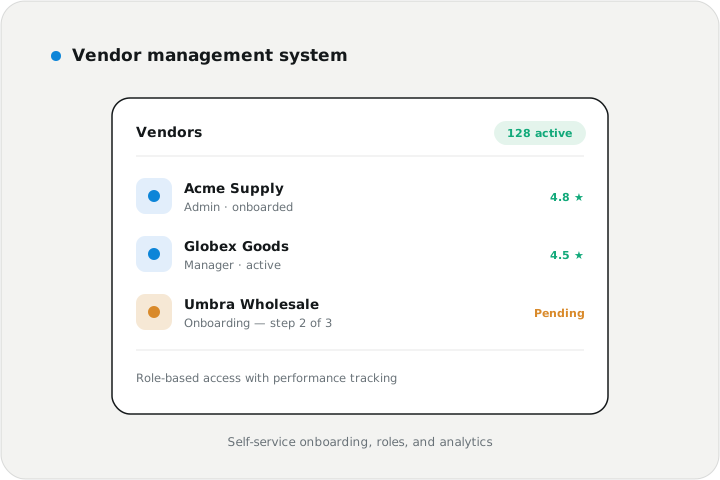
Vendor management system
Vendors
Self-service vendor onboarding and dashboards
Role-based access and permissions
Vendor performance tracking and analytics
-
02
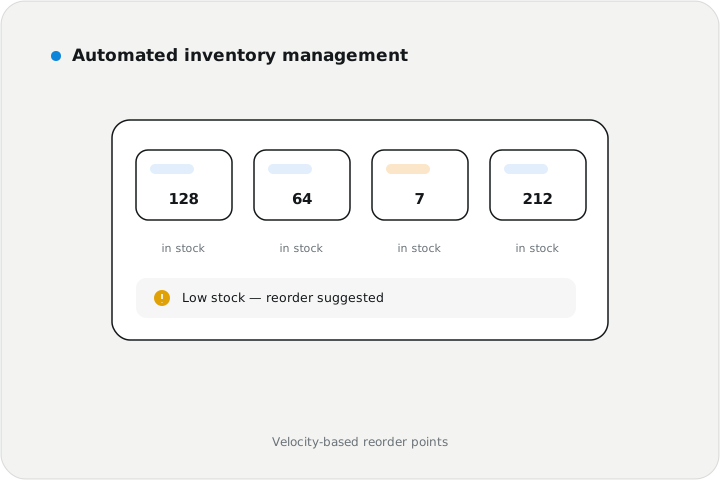
Automated inventory management
Inventory
Real-time inventory synchronization across vendors
Low-stock alerts and automated updates
Unified inventory visibility for administrators
-
03
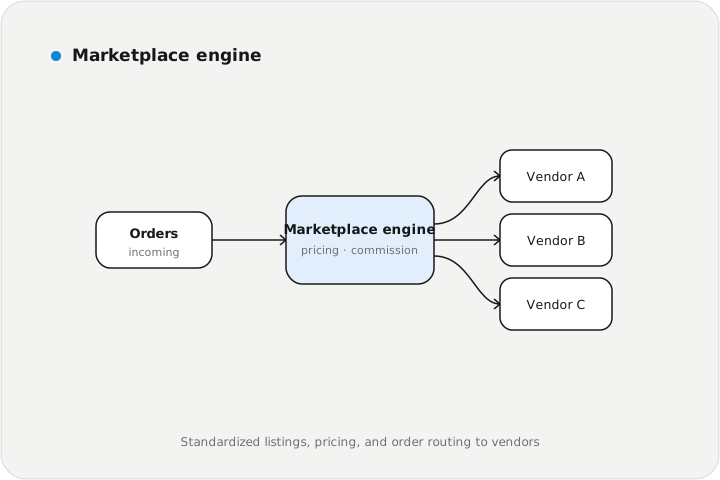
Marketplace engine
Marketplace
Multi-vendor product listings with standardized structure
Dynamic pricing and commission management
Order routing to respective vendors
-
04
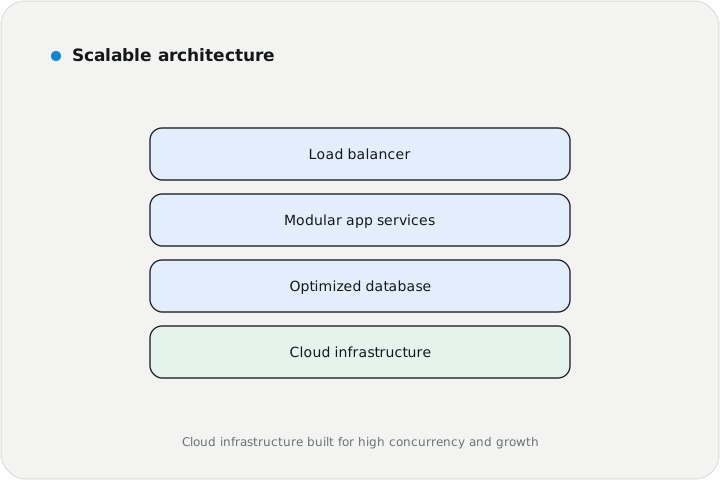
Scalable architecture
Scale
Cloud-based infrastructure supporting high concurrency
Modular backend for easy expansion
Optimized database handling large product catalogs
-
05
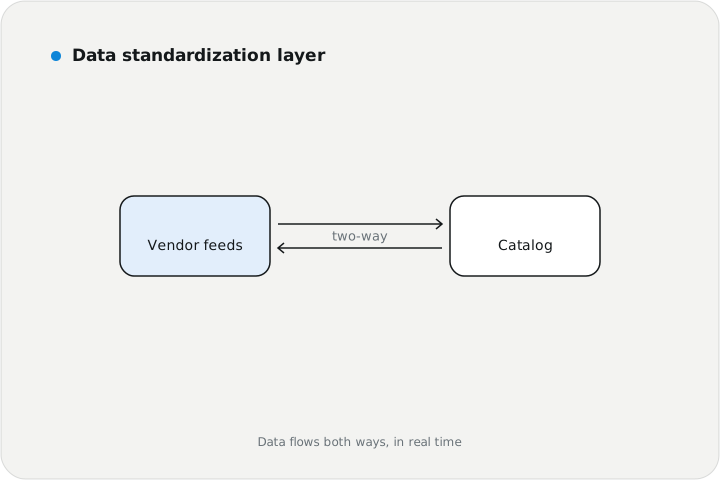
Data standardization layer
Data
Product normalization across vendors
Validation rules to ensure consistency
Centralized catalog governance
Stack used
- Custom marketplace architecture
- Real-time inventory synchronization engine
- Cloud infrastructure
- Role-based access control
- Data validation & standardization pipelines
Implementation approach
Phased delivery.
-
01
Marketplace design
Defined vendor workflows, permissions, and data structures.
-
02
Core platform development
Built vendor modules, catalog systems, and order routing logic.
-
03
Automation integration
Implemented real-time inventory synchronization and alerts.
-
04
Scaling & optimization
Stress-tested the platform and optimized performance for growth.
Results
Outcomes at a glance.
- 500+ vendors live
- Inventory synced in real time
- Governed catalog at scale
Onboarding a vendor used to be a two-week game of email tennis. It's an afternoon now. And when a seller stalls, I can see exactly where — instead of guessing.
- Fully automated inventory workflows
- Significant reduction in manual errors
- Improved operational efficiency across the marketplace
- Platform ready to scale beyond the initial vendor base
Impact & outcome
Unified vendor operations at scale.
The platform transformed fragmented vendor operations into a unified, automated marketplace ecosystem, enabling seamless collaboration between vendors and administrators.
Multi-vendor platforms require more than listings — they require control, automation, and scalability. We delivered a robust, scalable marketplace that empowers vendors, streamlines operations, and provides a strong foundation for long-term expansion.
Category owners fought the unified catalog for a quarter; the compromise — vendor-specific aliases over one taxonomy — shipped as a feature.
Ready to build your marketplace?
We build marketplace software for vendor onboarding, catalog management, and multi-vendor operations. We'll reply within one business day — no pressure, no sales script.
Start your project →