
Case study · Startups
Scale-Ready Launch.
A first release built for multiple roles and workflows
We built a product's first release for teams that needed more than one journey — multiple roles, connected workflows, billing, and an operations dashboard — delivered in phases.
Start your project →- Industry
- Startups & new products
- What we built
- 3 integrated components
- Key outcome
- 3 roles Live at launch
Overview
A first release with room to grow.
A founder's product wasn't a single-journey app — it needed different things for different user roles, connected workflows, and billing from day one.
They needed a real first release that could carry early customers and grow into later phases without a rebuild.
- Multiple user roles with different needs
- Workflows that had to connect, not sit in silos
- Billing and an operations view needed at launch
- A foundation that wouldn't need rebuilding to scale
The goal was a defined first release — real for users now, built to extend in phases.
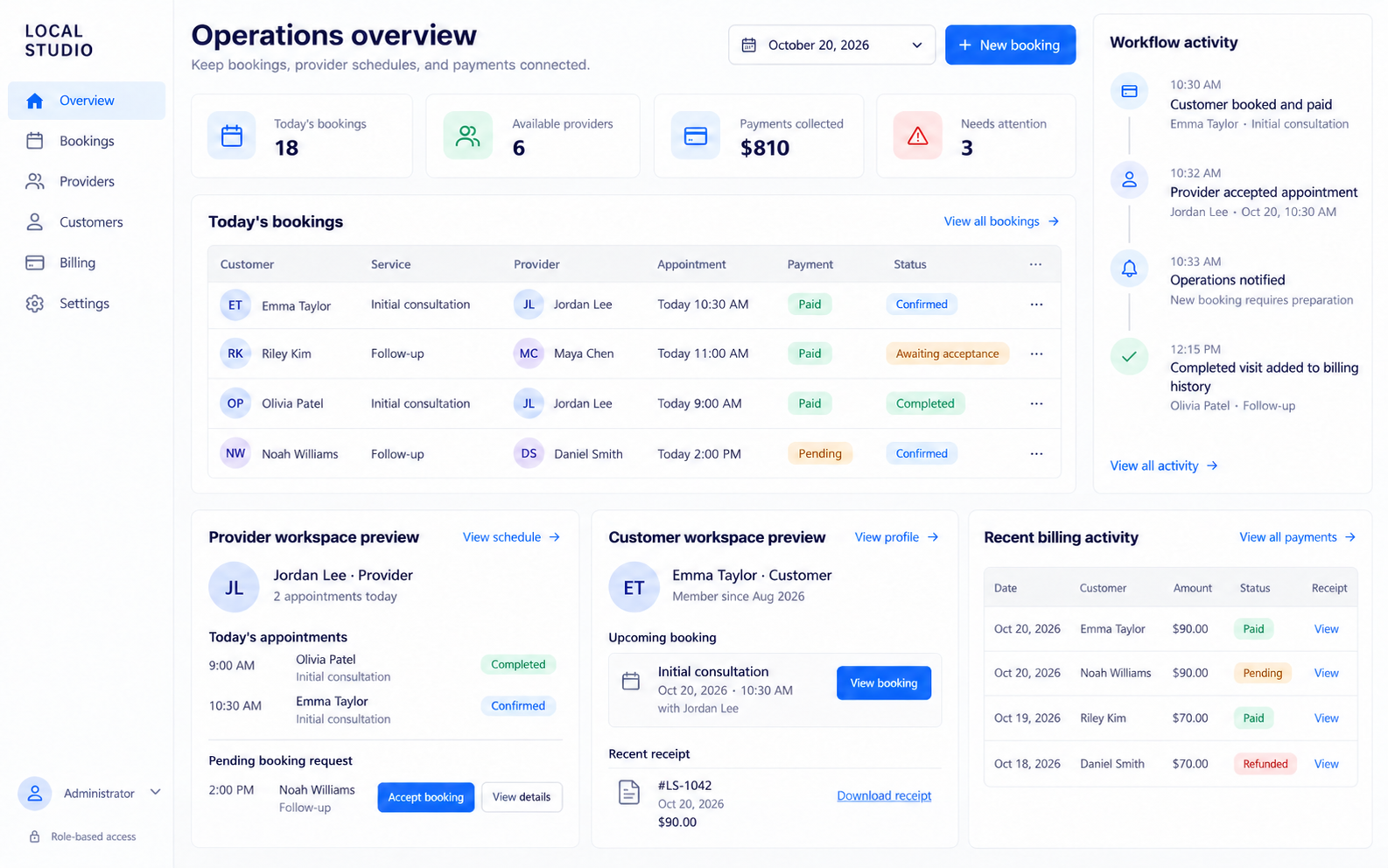
Experience flow
From roles to running operations.
The solution
A platform's first release, done in phases.
We built a defined first release — roles, connected workflows, billing, and an operations dashboard — on infrastructure that could grow into later phases.
Core components
Enough platform to run real operations now, with a foundation for what comes next.
-
01
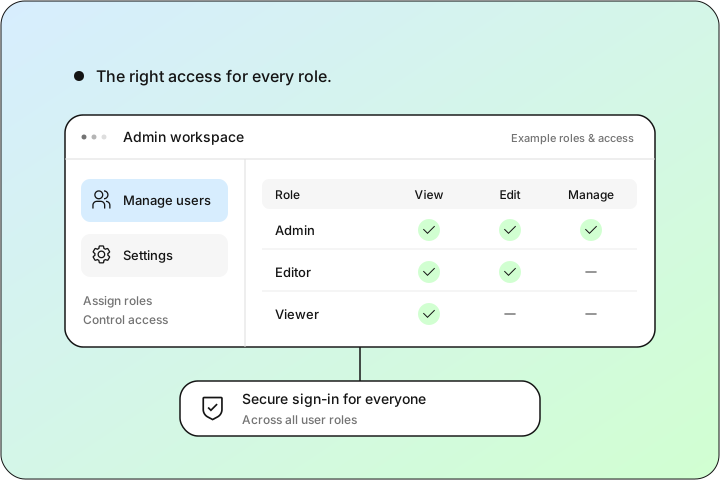
Roles & permissions
Access
Multiple user roles, each with the right access
Admin tools to manage users and settings
Secure sign-in across the board
-
02
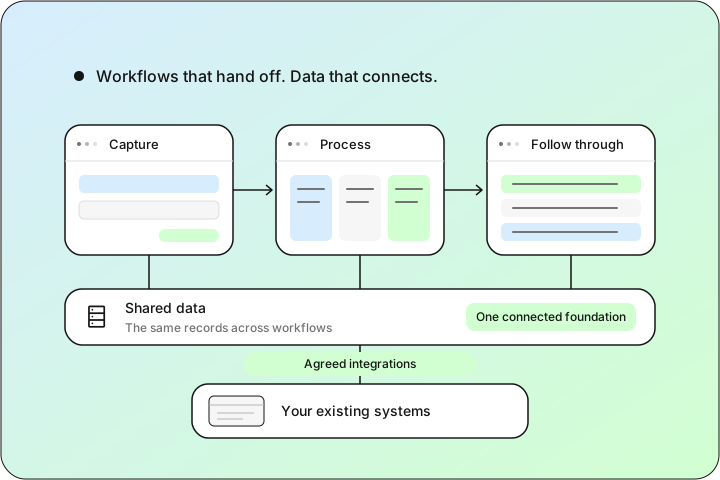
Connected workflows
Workflow
The core workflows, built to hand off to each other
Shared data instead of disconnected tools
Agreed integrations to existing systems
-
03
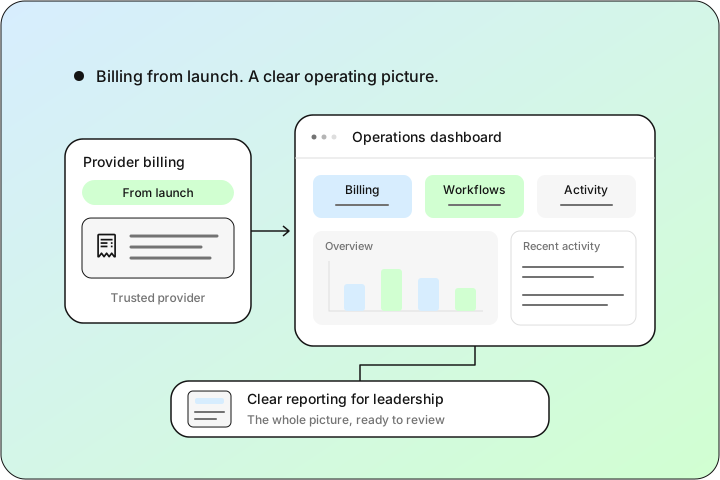
Billing & operations
Revenue
Billing through a trusted provider from launch
An operations dashboard for the whole picture
Reporting leadership can actually use
Stack used
- Next.js
- TypeScript
- Node.js
- PostgreSQL
- Prisma
- Redis
- OAuth 2.0
- Billing provider
- Google Cloud
- Cloudflare
- Docker
- Terraform
- GitHub Actions
- Sentry
Implementation approach
Phased delivery.
-
01
Define the first release
Agreed the roles, the connected workflows, the billing and operations needs, and what each later phase would add.
-
02
Build the foundation
Built roles and permissions, the connected workflows, and a data model designed to extend.
-
03
Billing and operations
Added billing, the operations dashboard, and reporting, tested against agreed usage.
-
04
Launch, phased
Deployed on automated infrastructure with monitoring, launched to early customers, and set up the next phases.
Results
Outcomes at a glance.
- Multiple roles
- Billing live
- Phased delivery
Everyone told us to ship a single-user tool first. We didn't — growers, buyers, and dispatchers all logged in on day one, because the whole point is one job's data moving through all of them instead of dying in spreadsheets between them. Billing ran from the first week, and we run our own operations on it, which keeps us honest. Phase two bolts onto what's there. Nobody here says the word 'rewrite.'
- Launched a real multi-role product, not a single-journey app
- Connected the workflows so data moved instead of sitting in silos
- Ran billing and operations from day one
- Built on a foundation that grows in phases, not rebuilds
Impact & outcome
Built once, grown in phases.
We delivered a first release that behaved like a product, not a prototype — multiple roles, connected workflows, billing, and an operations view, all live for early customers.
The win was the foundation. Because the data model and infrastructure were built to extend, later phases added capability instead of forcing a rebuild.
Starting phased kept the first release honest and affordable, while leaving a clear, costed path to everything that came next.
Launching something bigger than one screen?
We build scale-ready first releases — multiple roles, connected workflows, billing, and operations — delivered in phases. We'll reply within one business day — no pressure, no sales script.
Start your project →