
Case study · Platforms
API Integration Platform.
No-code automation across 200+ apps
We designed a no-code integration platform that helped businesses connect tools, automate repetitive workflows, and move data reliably across hundreds of applications.
Start your project →- Industry
- Platforms & integration
- What we built
- 5 integrated components
- Key outcome
- 99.96% Sync success over 12 months
Overview
Connecting business tools without integration chaos.
A software business needed a scalable integration platform that let users connect business applications, automate workflows, and synchronize data without writing custom code.
Their users relied on disconnected tools for sales, marketing, finance, operations, and support — creating duplicated data entry, manual exports, and inconsistent records across systems.
The main challenges included:
- Manual data movement between business applications
- Expensive custom integrations for each customer workflow
- Limited visibility into automation failures and sync errors
- Difficulty scaling connector support across hundreds of apps
The goal was a no-code connector platform that made integrations reusable, configurable, observable, and accessible to non-technical users.

Experience flow
From disconnected tools to automated workflows.
The solution
A no-code automation hub for 200+ business apps.
We developed an API integration platform with reusable connectors, workflow automation, data mapping, authentication management, monitoring, and error handling.
Core components
The platform gave users a guided way to connect apps, define triggers, map data fields, automate actions, and monitor workflow health.
-
01
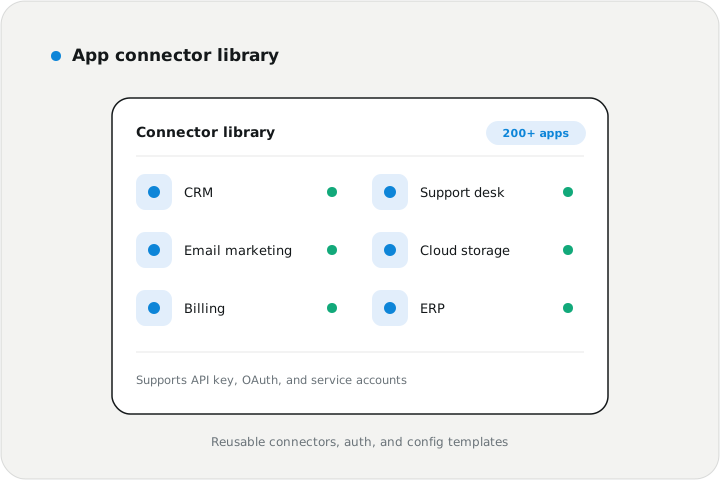
App connector library
Connectors
Reusable connectors for 200+ business applications
Authentication setup for API keys, OAuth, and service accounts
Connector configuration templates for common workflows
-
02
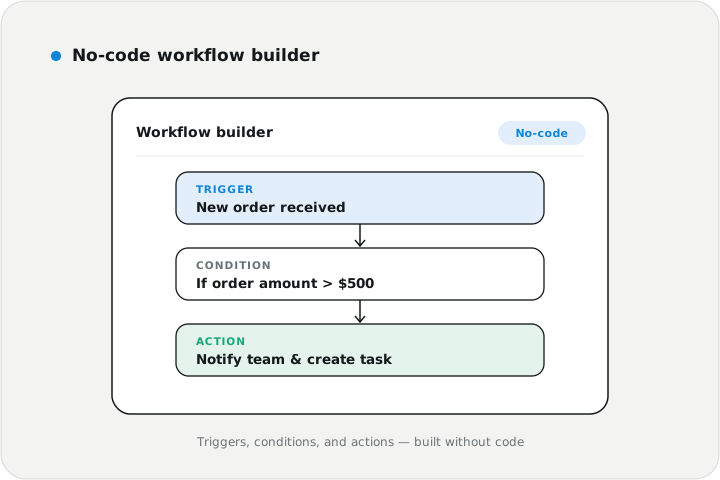
No-code workflow builder
Builder
Trigger-and-action automation setup
Conditional logic for routing and decision flows
Reusable workflow templates for common business processes
-
03
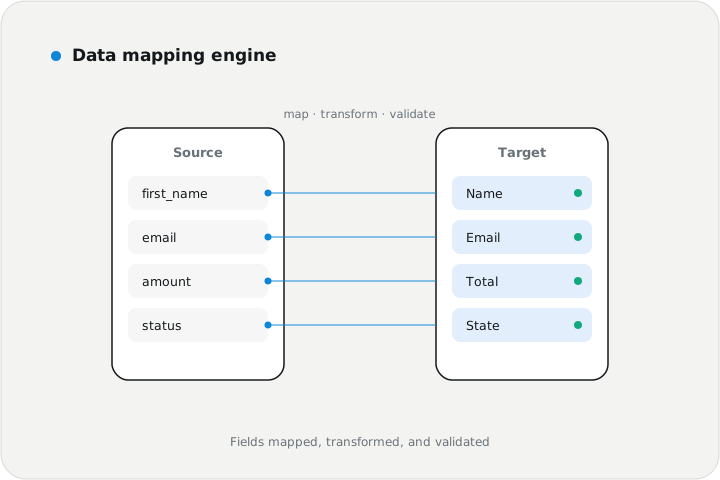
Data mapping engine
Mapping
Field mapping between source and destination systems
Data transformation rules for formats, labels, and values
Validation checks before records are created or updated
-
04
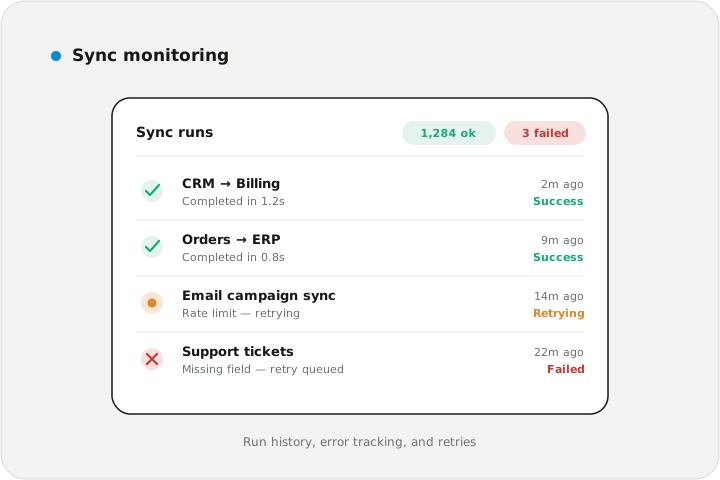
Sync monitoring
Monitoring
Workflow run history and execution status
Error tracking for failed requests, missing fields, and API limits
Retry queues and alerts for broken automations
-
05
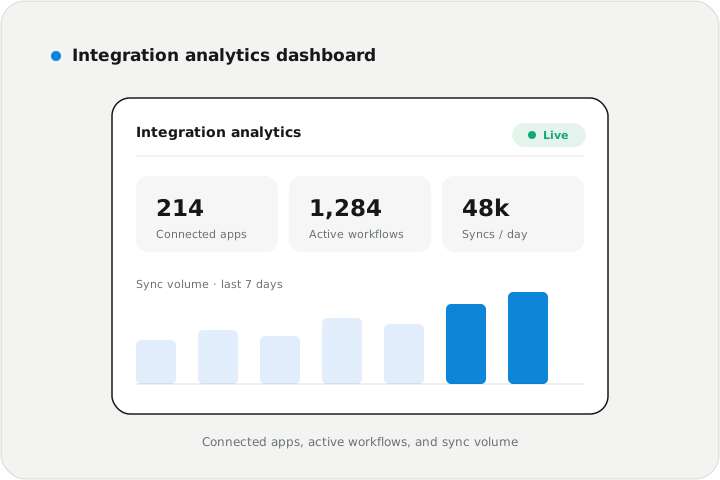
Integration analytics dashboard
Dashboard
Connected apps, active workflows, and sync volume visibility
Failure trends and automation performance metrics
Customer-level integration usage reporting
Stack used
- API integration platform
- No-code workflow builder
- Connector library
- OAuth / API authentication
- Data mapping engine
- Sync monitoring
Implementation approach
Phased delivery.
-
01
Integration assessment
Mapped target apps, business workflows, authentication patterns, data objects, API limits, and sync requirements.
-
02
Connector architecture
Designed reusable connector contracts, workflow triggers, actions, mapping rules, retry behavior, and monitoring events.
-
03
Platform build
Implemented the connector library, no-code builder, authentication flows, mapping engine, sync workers, and dashboards.
-
04
Testing and launch
Validated app connections, workflow execution, field mapping, error recovery, API rate handling, and configuration flows.
Results
Outcomes at a glance.
- No-code automation
- 200+ app ecosystem
- Sync monitored
The first integration pass missed our ERP's quirks and cost us a month. To their credit, they owned it — two of their people basically lived at our plant for a week — and the retry has held for a year. The dashboards are boring now, which is the point.
- Reduced custom integration effort through reusable connectors and workflow templates
- Enabled non-technical users to automate business processes between connected applications
- Improved data consistency through field mapping, validation, and transformation rules
- Increased operational trust with workflow monitoring, retry queues, and error visibility
- Created a scalable foundation for marketplace connectors, partner integrations, and enterprise automation
Impact & outcome
A scalable automation layer for connected businesses.
We delivered an API integration platform that helped businesses connect their tools, automate repetitive work, and manage data movement across a growing app ecosystem.
Modern businesses depend on many specialized tools. This platform gave users a no-code way to connect those tools, reduce manual handoffs, and keep workflows moving with greater reliability.
The connector library started with only the systems this client actually ran; the long tail of connectors came later, one engagement at a time.
Need an API integration platform?
We build no-code connector platforms, workflow automation systems, app integrations, data mapping tools, and sync monitoring dashboards. We'll reply within one business day — no pressure, no sales script.
Start your project →