API layer over legacy
Expose stable interfaces so new apps and integrations don't require touching fragile internals every time.
Legacy
Move off software you've outgrown in steps—keeping whatever still earns its keep and replacing only the parts holding you back.
We help teams escape brittle monoliths, unsupported tools, and integration spaghetti without freezing the business for a year-long rewrite.
Let's talk about modernization →
Why incremental
Your team still ships product, serves customers, and closes the books while the old system creaks. A full replacement sounds clean until scope, risk, and downtime compound—and the launch slips another quarter.
Modernization done well introduces new capabilities beside legacy pieces, migrates traffic and data in controlled slices, and leaves you with software you own—not another vendor lock-in.
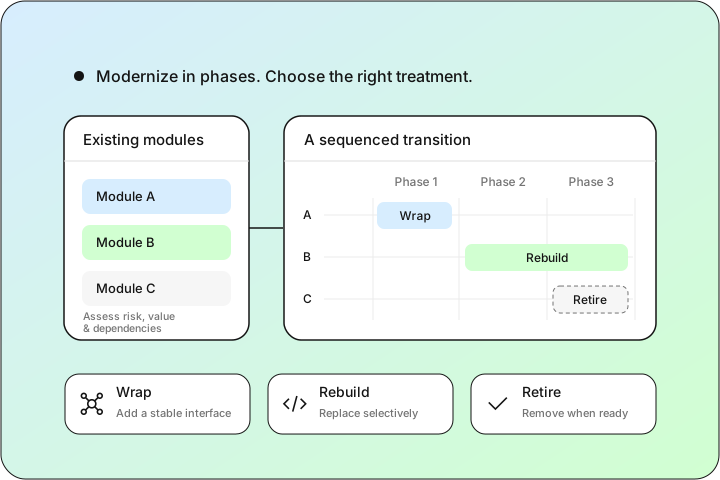
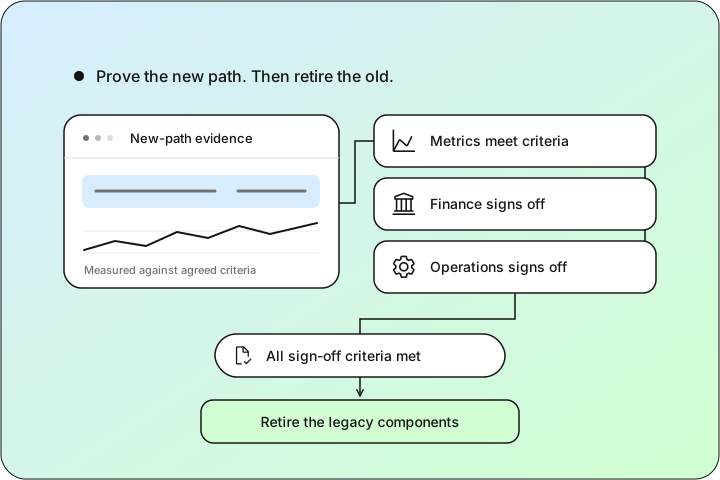
Sequence modules by risk and revenue impact: wrap what you must keep, rebuild what clients touch, and retire components only when metrics prove the new path holds.
Expose stable interfaces so new apps and integrations don't require touching fragile internals every time.
Billing, reporting, admin, or customer-facing surfaces rebuilt while the core keeps running until cutover is safe.
Move history in batches, reconcile against source systems, and roll back if counts or balances don't line up.
Hosting, observability, and deployment pipelines that match how you ship today—not how the old vendor hosted in 2012.
Document decisions, data mappings, and cutover steps while you replace modules—so ops isn't guessing after the consultants leave.
Built for teams under live pressure
Legacy systems often still process real money and real customers. The goal is not a slide-deck architecture—it is safer change with evidence at every step.
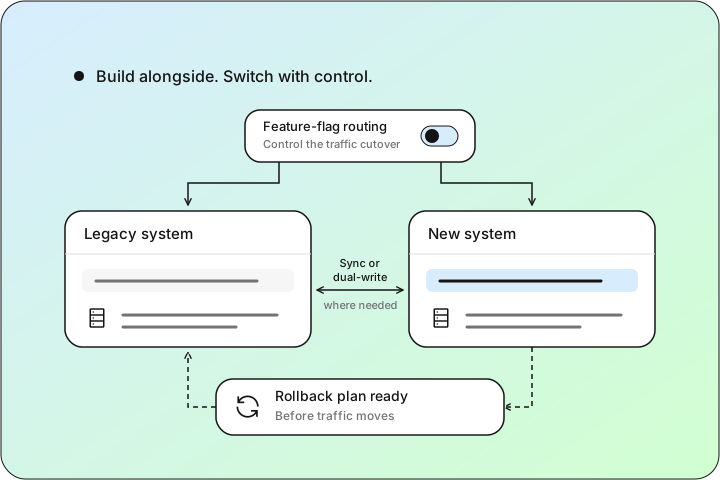
We work alongside your operators and engineers: dual-write where needed, feature-flag cutovers, and rollback plans before traffic moves.
You keep ownership of the code and roadmap when the engagement ends—without trading one vendor prison for another.
Smaller releases with validation gates beat monolithic launches that paralyze the business when something slips.
New surfaces on modern stacks while legacy cores keep doing the heavy lifting until you're ready to swap them.
APIs and event flows that new SaaS and internal tools can plug into—without brittle screen-scraping.
Reconciliation reports and batch checks so finance and ops sign off before you turn off the old path.
Decommission modules when usage, metrics, and runbooks say it's safe—not when a calendar milestone says so.
Outcomes depend on legacy complexity, data quality, and how much of the stack you replace first—not every modernization yields the same timeline or cost profile.
What that can look like
Work where we connected, rebuilt, or replaced systems under live business pressure.
Unified APIs and automation between CRM, ERP, and SaaS tools that used to sync by hand.
Read the case studyScheduling, records, and billing brought into one system built for how the practice actually runs.
Read the case studyVendor onboarding, payouts, and catalog growth on architecture meant to handle real transaction volume.
Read the case studyCourses, progress, and admin rebuilt for reliability and an experience learners stick with.
Read the case studyGreenfield product work lives under MVP development and Web applications.
How we get there
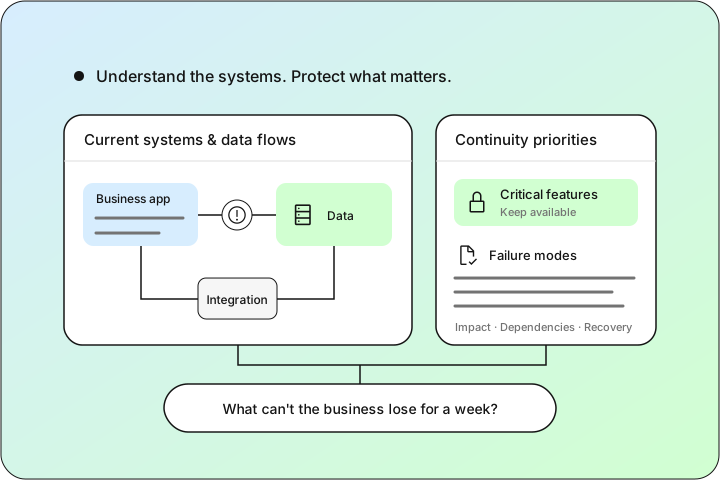
Systems, data flows, failure modes, and the features the business truly cannot live without for a week.
Sequence modules by risk and value—what to wrap, what to rebuild, and what to retire.
Dual-write or sync where needed, feature-flag cutovers, and rollback plans before traffic moves.
Retire old components only when metrics, finance, and ops sign off that the new path holds.
What you get
You keep the code, roadmap, and accounts—no trading one vendor lock-in for another.
Incremental releases with validation gates instead of a single high-stakes cutover.
Stable APIs and event flows that new tools can plug into, without brittle screen-scraping.
Reconciliation reports and batch checks so finance and ops sign off before legacy is retired.
Decisions, data mappings, and cutover steps captured so your team can operate it after launch.
Tell us what's failing, what's sacred, and your timeline. We'll outline a modernization path you can execute in phases.
Let's talk →Answer a few quick things and the right person gets back to you within one business day — with a plan, a fixed quote, or a prototype to click through.
Sign in to your CYBERCUBE client portal to track projects, view live dashboards, and message your team.
Ask about our work, services, or how we'd approach your project.
Hi, I'm Ping — CYBERCUBE's assistant. Tell me what you're trying to build or fix, and I'll point you the right way, or connect you with the team.
Prefer a human? or email [email protected].